Best ERP Systems for Finance in 2026: A Guide to Choosing the Right Platform

Regulatory compliance, real-time reporting, scalability, and cost control via centralized systems have become the norm in many organizations now. Why? The right ERP simply reduces costs (i.e., purchasing and inventory) and improves operational, managerial, and financial workflows. For that, an ERP system needs to be flexible, provide real-time visibility, and speed without the cost of traditional implications.

This article will cover what an ERP system is, the top 5 best options you can consider, and how to choose the right platform as per your needs.

What Is an ERP System?

An ERP (Enterprise Resource Planning) software is a whole package/all in one place that lets organizations handle multiple business functions using a common interface and central database. To put it simply, it allows authorized employees to access data across all departments. Businesses opt for different software for reporting and tracking as per their scope and needs, to automate cross-departmental information access to enable accurate and effective reporting.

Why CFOs Exactly Need ERP Software

There are many reasons to set up an ERP system: 

  • Efficiency Through Automation: Improves efficiency, automates manual tasks, and reduces errors across all departments.
  • Single Source of Data: It unifies all operational and financial data and offers accurate insights on the go.
  • Better Scalability: Scales with the company’s growth, especially cloud ERP options, so the systems grow when the business grows.
  • Smooth Decision-Making: Offers KPI dashboards and analytics to help executives make the right decisions without wasting time.
  • Easy Compliance: Integrated features guarantee VAT compliance and facilitate audits and regulatory reporting.

Top 5 Best ERP Systems for Finance

1. Oracle NetSuite ERP
 

Oracle NetSuite ERP

Best for: Fast-growing mid-sized companies

NetSuite is considered the best ERP for CFOs for all the right reasons. This system shows solid adoption across all company sizes of 50+ employees, with a strong market share among enterprise organizations.

Key Features:

Customized dashboards and reports, customized budgeting, personal dashboards, and multi-entity support are among its key specifications.

Pricing:

  • Quote-based (subscription pricing can vary by users)

Pros:

  • Cloud-native platform
  • Scales well with growth
  • Robust reporting and analytics
  • Extensive ecosystem

Cons:

  • Less transparent prices and models

Microsoft Dynamics 365 Finance

Microsoft Dynamics

  • Best for: Microsoft-centric organizations

Microsoft Dynamics 365 helps businesses in their sales, operations, finances, customer relationships, and more. Their modular ERP approach enables expanded functionality over time.

Key Features:

People love Microsoft Dynamics for its invoice customization, journal entries, AI integrations, purchase order management, and inventory automation.

Pricing:

  • Starts around $180/user/month (license-based)

Pros:

  • Familiar interface for finance teams
  • Strong analytics via Power BI
  • Flexible deployment options
  • Good automation capabilities
  • Enterprise-grade security

Cons:

  • Sometimes requires skilled setup partners
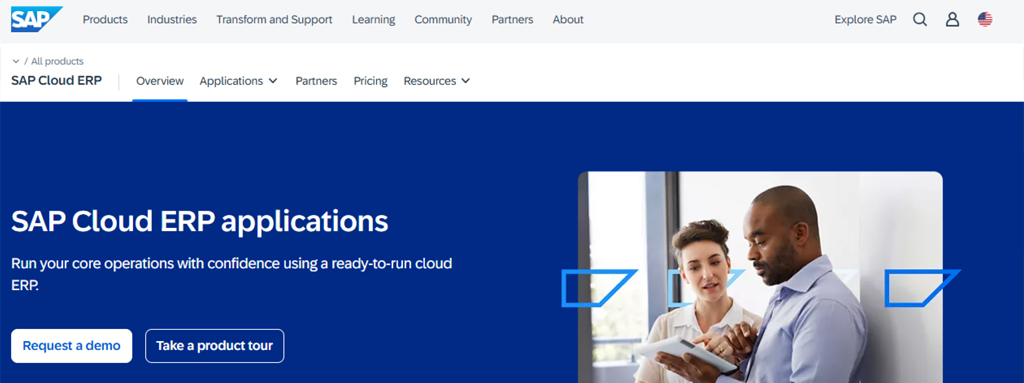
SAP S/4HANA Finance

4HANA Finance

  • Best for: Large and global enterprises

Originally called System Analysis Program Development, the SAP ERP system works great when it comes to automating multiple organizational processes. Its automation and flexibility make it well-suited for large enterprises with complex needs.

Key Features:

Its main specifications are tax and treasury management, compliance, supply management, multi-entity support, internationalization, and custom workflows.

Pricing:

  • Quote-based (varies by deployment and scale)

Pros:

  • Industry-leading financial depth
  • Handles complex structures well
  • Strong regulatory compliance
  • Real-time analytics
  • Proven enterprise reliability

Cons:

  • It has a high implementation cost

Odoo (Enterprise Edition)

Odoo (Enterprise Edition)

  • Best for: SMBs and fast-scaling companies

Last but not least, Odoo is an open-source ERP software 2026 is a good choice for its affordability and flexibility. The platform attracts all types of businesses (especially e-commerce and marketing) that prefer cost control and flexibility.

Key Features:

Dedicated business apps, integrations, custom dashboards, a reasonable pricing structure, and active community support are what set it apart from competitors.

Pricing:

  • Starts at ~€20–€30/user/month for core modules

Pros:

  • Low cost of entry
  • Modular and flexible
  • Good for custom workflows
  • Integrated apps suite
  • Easy user adoption

Cons:

  • Some advanced features require add-ons
  • Support varies by partner

Infor CloudSuite

  Infor CloudSuite

  • Best for: Manufacturing & distribution finance teams

Our next pick, Infor CloudSuite, has built a strong market reputation through deep industry expertise. It offers special Cloudside editions for healthcare, fashion, manufacturing, etc., and each edition incorporates thebest practices.

Key Features:

The features that make it stand out are a consumer-grade user interface, pre-configured industry workflows, strong functionality, and supply chain management capabilities.

Pricing:

  • Subscription model (varies by industry)

Pros:

  • Strong industry versions
  • Good forecasting tools
  • Cloud-first architecture
  • User-friendly dashboards
  • Flexible reporting

Cons:

  • Less global footprint than bigger ERP vendors

What to Look for in an ERP System for Business?

Before choosing the best ERP system for your finance management, consider a few key factors:

  • Mobility

If your organization has employees who work on the road or at home, you should choose a system that supports different devices (smartphones, tablets, laptops, etc.) and provides access over the Internet.

  • Security

Find a system that offers strong protection against information leaks and the prying eyes of bad actors and competitors. Your company’s data is valuable, so make sure it’s always well protected.

  • Relevant Reporting

Confirm whether the ERP system provides real-time, accurate visibility across all areas of your company. It can help you identify opportunities and trends for optimization and growth.

  • Scalability

An ERP system that scales with your business is the best choice. Consider future requirements, including international expansion, new sales channels, additional users, and increased transaction volume, and then decide.

  • Ease of Use

Another factor to look into is the software’s user-friendliness and learning curve. If possible, let the main employees review and test a demo of the ERP system and provide feedback.

  • Overall Cost

The system has to add value to your business. Therefore, factor in all costs: ongoing support, integration, customization, implementation services, internal resources, and training required. Hidden costs can cause trouble later.

Using ExpenseVisor to Enhance Financial Efficiency!

Cloud ERP systems are undoubtedly powerful, but they are not designed to handle every financial workflow in detail, especially employee expenses. That’s why you can combine it with the ExpenseVisor tool to improve control and visibility over employee-driven spending.

It assists CFOs and financial teams in:

  • Tracking expenses across categories and departments
  • Automating expense reporting and receipt capture
  • Gaining real-time insights into spending patterns
  • Improving accountability and approval workflows
  • Simplifying reconciliation with structured reports

And no, you don’t need to replace your ERP system to get the most out of ExpenseVisor. This software will help strengthen the financial ecosystem by ensuring that the expense data is auditable, accurate, and easier to integrate into broader financial reporting.

Related Insights

With financial markets evolving, a question is emerging....
AI is taking over, and corporations of every scale are incorporating & investing in it in their workflows like never before....
Sending money across borders is routine work for many businesses....