


The smart way to manage expenses effectively is to create clear processes that allow employees to spend responsibly while giving you visibility into exceptions and trends. Businesses can ease that load by following these steps:
Step 1. Build Clear Spending Policies First
The easiest way to reduce oversight is to create clear-cut rules up front.
Because when employees know what exactly is allowed, you won’t need to question every submission. A strong spending policy must define:
- Approved expense categories
- Spending limits by role or department
- Documentation requirements
- Approval thresholds
- Reimbursement timelines
For example, if a sales manager travels to meet a client, he might have higher transportation or meal limits compared to an office-based employee. Hence, when policies are defined, the chances of ambiguity become low.
Step 2. Use Automation to Replace Manual Monitoring
Automation is one of the most useful ways to track spending without becoming overly possessive. What happens when you use tools like ExpenseVisor is that policy rules are automatically enforced.
That means such modern expense platforms can easily:
- Flag out-of-policy transactions instantly
- Detect duplicate submissions
- Match receipts with transactions
- Route approvals automatically
- Categorize expenses in real time
Organizations that automate expense management significantly reduce processing costs and enhance compliance accuracy, which is not possible with manual systems. Automation shifts finance teams from reviewing every expense to only reviewing exceptions. That saves time and improves accuracy & eliminates micromanaging.
Step 3. Set Approval Workflows Based on Risk
Not all expenses need to be reviewed at the same level.
Because of this, your smart approval structure needs to focus on risk instead of treating every expense equally. This example will help you understand:
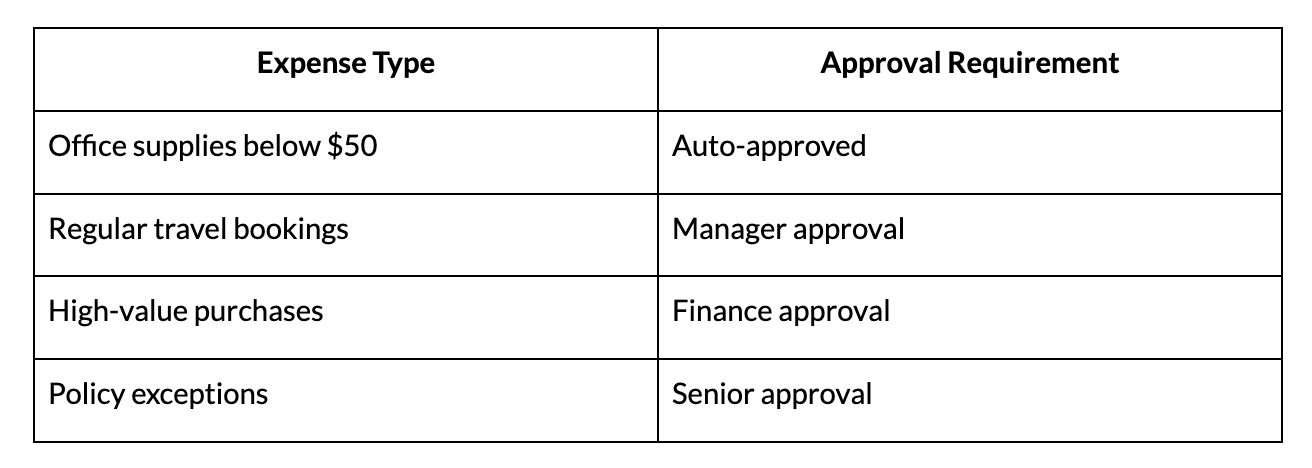
Step 4. Give Employees Self-Service Tools
Employees are likely to comply when the procedure is simple. And if expense reporting feels even a little complex, they make mistakes or delay submissions all the time. Self-service tools, in this situation, help improve adoption by making it more convenient to:
- Upload receipts through mobile apps
- Submit expenses on the go
- Track approval status in real time
- View policy guidelines instantly
A mobile-first process not only limits the need for constant reminders but also lessens friction.
Step 5. Monitor Trends Instead of Individual Transactions
Tracking every single expense becomes inefficient when you do it all without automation. A better way is to focus on unusual activity and monitor spending patterns. For example, account sectors should look for:
- Repeated policy violations
- High-spend departments
- Frequent reimbursement delays
- Duplicate or unusual claims
That will give you a bigger picture view and help identify risks before they even escalate. This way, strategic oversight becomes more valuable than micromanagement.